
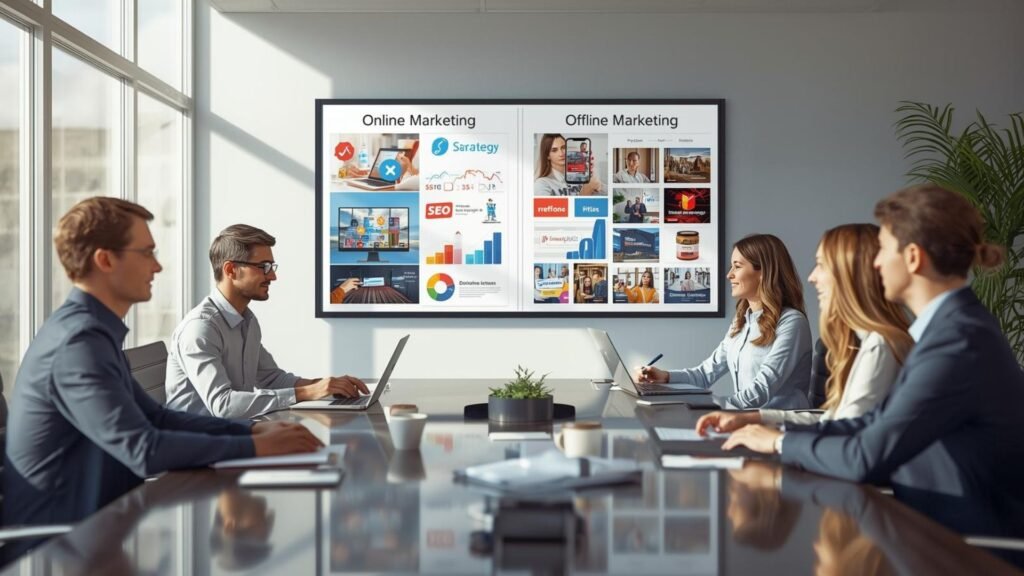
The argument over whether to market online or offline is getting bigger in the business world today. Brands want to be seen, get sales, create long-term value, and grow in a way that lasts. Both marketing methods help with these goals in different ways. Which one to choose depends on people’s goals, target audience, budget, and the needs of industry. This complete guide talks about how online and offline marketing work, what makes them different, what their benefits are, and how they can help service-based businesses. The goal of this content is to give clear, reliable, and SEO-friendly information that fits with how people search and Google’s standards for content quality.
What does online marketing mean ?
Online marketing is any kind of advertising that happens on digital platforms. It uses the internet to reach people who might buy from it in different ways. These are:
- Search Engine Optimization (SEO)
- Marketing on Social Media
- Marketing with Content
- Pay-per-click (PPC) and Google Ads
- Email Marketing
- Marketing on the Web
- Marketing with Influencers
Digital technologies have grown so much that all businesses need to do online marketing. It gives us measurable results, campaigns that are focused on our goals, and the ability to track performance in real time. Also, digital platforms have an unlimited reach, which makes it easy to show off services to a larger and more relevant group of people.
What is Offline Marketing ?
Offline marketing is using old-fashioned ways to promote business that don’t need the internet. These strategies get to people through real-life and physical channels. Some common ways to market offline are:
- Ads in Magazines and Newspapers
- Ads on the radio and TV
- Print Media, Flyers, and Brochures
- Billboards and advertisements outside
- Exhibitions, trade shows, and events
- Direct Mail Marketing
Even though digital marketing is the most popular way to market today, offline marketing is still useful. It makes the brand more trustworthy, strengthens its local presence, and gives customers memorable brand experiences. Many well-known brands use both online and offline strategies to get the best results.
What makes online and offline marketing different
Businesses can choose the best marketing strategies for their goals, target audience, and available resources if they know the difference between online and offline marketing.
1.Reach of the Audience Online & Offline Marketing
Online marketing can reach people all over the world. A brand can reach specific groups no matter where they are in the world with SEO, social media, and content marketing. Digital channels also help reach specific groups of people who are very interested in what they have to say.
Offline marketing is usually about reaching people in an area or region. Billboards, flyers, and other physical ads are aimed at people in a certain area. It is useful for businesses that want to be well-known in their area.
The main difference is that online marketing reaches more people, while offline marketing makes business more visible in the area.
2. Costs and Budget Needs
Marketing on the Internet:
Digital strategies often change budgets as needed. People don’t need to spend a lot of money to get started with SEO, content marketing, or social media campaigns. Need to set aside money for paid ads, It can measure and improve their results.
Marketing that doesn’t use the internet:
Traditional marketing costs more most of the time. It costs more money to advertise on TV, in newspapers, and on billboards. It is also harder to keep track of the return on investment.
The main difference is that online marketing is cheaper and easier to track than offline marketing, which costs more.
3. Targeting Options for Online Marketing
Advanced targeting is possible with modern digital platforms. Companies can concentrate on users’ interests, demographics, behaviours, keywords, and location. This makes campaigns that are very precise and work well.
Marketing that doesn’t use the internet:
Offline marketing doesn’t target people very well. A billboard or newspaper reaches a lot of people, but not everyone who sees it is a potential customer.
The main difference is that online marketing lets target specific people, while offline marketing gives more general exposure.
4. Interaction and Engagement Online Marketing
Digital channels let people get involved right away. Users can quickly click, comment, share, or look into services. Videos, blogs, and social media posts that people can interact with make customers more involved.
Marketing that isn’t online:
One-way communication is the main way that offline marketing works. It helps people learn about the brand, but it doesn’t let them interact with it much. But events and exhibitions get people to interact with each other in person.
5. Analytics and Measurability Online Marketing
Every action is tracked by analytics tools. Businesses can keep track of clicks, impressions, conversions, and patterns of behaviour. This helps get better at strategy and make more money.
Marketing that doesn’t happen online:
It’s hard to keep track of performance. Surveys or general sales observations are used to guess results, but these methods may not give accurate data.
The main difference is that online marketing gives detailed analytics. Offline marketing is based on guesses and rough estimates.
6. Online marketing for conversion rates and lead generation
Digital platforms bring in high-quality leads. SEO-optimized content and ads that target the right people make conversions happen faster. Online enquiries are very helpful for businesses that provide services.
Marketing that isn’t online:
Conversions depend on how people interact with each other and how motivated the customer is. Even though offline methods build trust, they might not get leads right away.
The main difference is that online marketing gets results faster, while offline marketing builds trust over time.
7. Trust and Credibility of the Brand Online Marketing
Having a presence online helps build trust by sharing content, reviews, and social proof. Regular online activity builds authority.
Marketing that doesn’t use the internet:
Physical marketing materials are real and trustworthy. Brand trust grows with TV ads, print media, and local events.
The main difference is that online marketing builds trust online, while offline marketing gives people physical proof of a brand.
Why Online Marketing Is Better for Service-Based Businesses
Businesses get good leads by showing them to the right people. People will trust brands more if they talk to them on social media. Google Ads shows services to people who might want to buy them, which helps get quick requests. Over time, SEO will help websites get more organic traffic. Content marketing also teaches people about the business and makes them more interested in it by giving them information that is both useful and interesting.
Service businesses can show off their skills, build their authority, and reach customers who are actively looking for services that are relevant to them on online platforms.
Conclusion
The argument between online and offline marketing shows how the method is good. Online marketing lets people all over the world see how well campaigns are doing, and use targeted strategies. Offline marketing, on the other hand, gives us a physical presence and builds trust in our brand. A smart mix of both will give the most exposure, the best conversions, and long-term business growth.
Digital strategies are very helpful for service-based businesses, but offline methods can still help build brand trust. Knowing the main differences helps make a strong marketing plan that meets the needs of the industry.